Hyderabad, July 30: BITS Pilani, Hyderabad Campus, Scientists have developed an integrated and low-energy technology for wastewater treatment. It can provide a sustainable solution to the management of one of the most problematic wastewater streams in the biopharmaceutical industry.
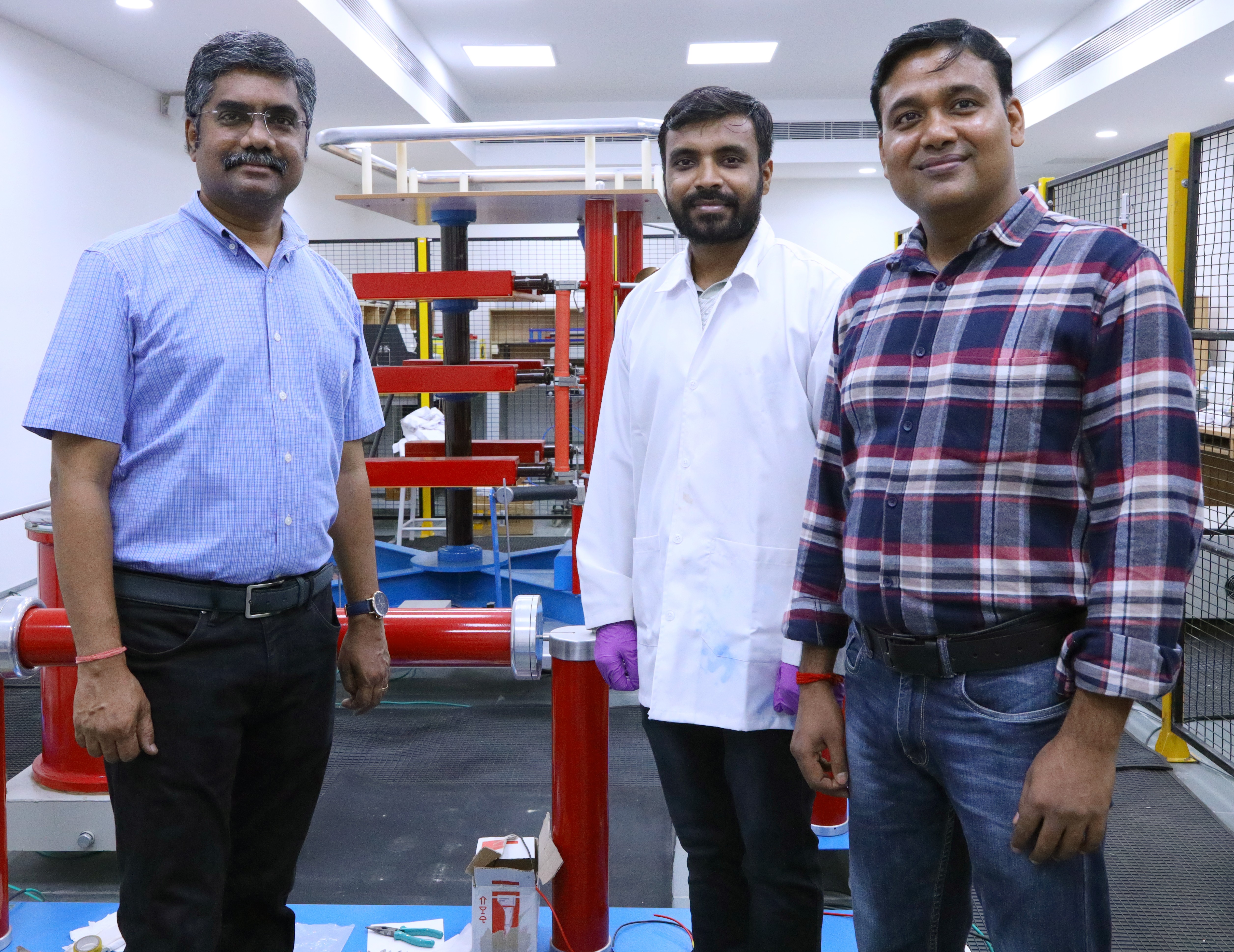
Researchers have successfully demonstrated the technology at the laboratory scale, the research team is now working with Biological E. Limited, one of India’s leading vaccine manufacturers based in Genome Valley, Hyderabad, to scaling the system for industrial deployment.
The innovative system replaces conventional chemical- and steam-based sterilisation with Pulsed Electric Field technology. It enables biopharmaceutical fermentation wastewater to be safely disinfected while recovering reusable water and methane-rich biogas. The technology could be applied to other pharmaceutical and vaccine production facilities and high-strength industrial wastewaters, , to benefit industries with water-saving, energy-recovery and environmentally friendly integrated solutions.
The project is supported by the Department of Science and Technology , Government of India, through its ‘Water Technology Initiative’ of the Optimum Water Use in Industrial Sectors programme. The core disinfection technology has been filed for an Indian patent.
The research was carried out by researchers from the BITS Environmental Science and Technology Laboratory, Department of Biological Sciences, led by Prof. Sankar Ganesh Palani, Prof. Mithun Mondal from the Department of Electrical and Electronics Engineering, and research scholar Mr. Ravindra Dnyanaba Kulal.
Elaborating on the need for such research, Prof. Sankar Ganesh Palani, Department of Biological Sciences, BITS Pilani, Hyderabad Campus, said,
“Conventional treatment of biopharmaceutical fermentation wastewater consumes significant quantitiesof chemicals and thermal energy. Our integrated approach demonstrates that it is possible to safely disinfect this complex wastewater using electrical pulses while simultaneously recovering valuable resources including reusable water and clean energy. We hope this technology will support industries in reducing their environmental footprint while improving the sustainability of wastewater management.”
The researchers have filed an Indian patent for the disinfection technology, titled ‘Voltage-Assisted Inactivation of Bacteria in Wastewater, while a research paper detailing the findings is currently under peer review.
Biopharmaceutical fermentation wastewater is among the most difficult industrial effluents to treat because it contains millions of live production microorganisms, residual antibiotics, and antibiotic resistance genes. Owing to the associated biosafety risks, industries currently rely on chemical treatment followed by steam-based autoclaving before disposal—a process that is both energy-intensive and expensive.
In response to these challenges, the team of BITS Hyderabad developed an energy recovery-based integrated three-stage treatment process using electricity for disinfection, followed by biological treatment.
‘THREE STAGE PROCESS’
The first stage uses Pulsed Electric Field technology, where extremely high-voltage short electrical pulses destroy bacterial cells through a process known as irreversible electroporation. Unlike conventional sterilisation methods, the process requires neither chemicals nor heat. Laboratory studies on real biopharmaceutical fermentation wastewater demonstrated more than 99.9999 per cent bacterial inactivation, achieving sterilisation performance comparable to conventional autoclaving while significantly reducing energy consumption.
Following electrical disinfection, the wastewater is treated in a Sequencing Batch Reactor, where naturally occurring microorganisms remove organic pollutants. This biological treatment eliminates over 90 percent of the organic load, producing treated water that approaches reuse quality after membrane filtration.
The final stage converts residual sludge into a renewable energy resource using the team’s patented Intelligently Stirred Thermophilic Anaerobic Reactor. The reactor produces methane-rich biogas that can meet part of the treatment plant’s own energy requirements, while the treated water can be recovered for reuse, helping industries move towards zero liquid discharge and more sustainable water management.