The skills needed to succeed at work are constantly changing. New technologies, evolving business practices and rising customer expectations are pushing employees to learn continuously. Yet finding time for professional development can be difficult when deadlines, meetings and daily responsibilities take priority.
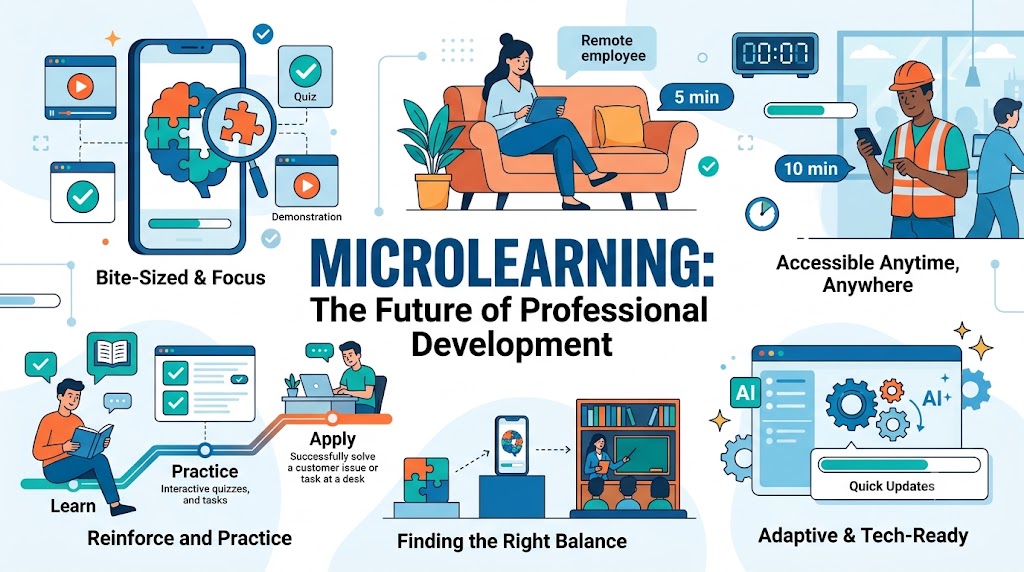
Microlearning offers a practical solution by making training shorter, more focused and easier to fit into a busy schedule. Instead of completing lengthy courses in one sitting, employees can learn through brief videos, interactive quizzes, demonstrations and other bite-sized lessons designed around a specific skill or task.
For businesses, this approach creates an opportunity to make training more relevant to everyday work. Microlearning in professional development is helping organisations move towards continuous learning, where employees can build skills gradually and apply new knowledge as business needs evolve.
Making Learning Easier to Access
Traditional training programmes often require employees to set aside several hours or attend scheduled workshops. While these formats remain valuable for in-depth learning, they can be difficult to organise across teams with different responsibilities and working hours.
Microlearning breaks larger subjects into smaller, manageable lessons. An employee can learn a new software feature, refresh knowledge of workplace procedures or improve customer communication without stepping away from regular duties for an extended period.
This flexibility makes training more accessible, particularly for businesses with remote teams, frontline employees or limited training resources. It also allows employees to revisit specific information when they need it, rather than relying entirely on what they remember from a previous session.
The key is to keep each lesson purposeful. Short content works best when it addresses a clear learning objective and provides information that employees can use in their roles.
Building Skills Through Everyday Practice
Learning becomes valuable when employees can apply it confidently at work. A single training session may introduce a concept, but retaining that knowledge often requires practice and reinforcement.
Microlearning can support this process through short assessments, regular revision and practical exercises. Employees can revisit important information over time, strengthening their understanding and identifying areas where they need further support.
This approach can be used for technical training, workplace safety, compliance, communication and leadership development. It can also help employees become familiar with new digital tools and changing business processes.
For employers, the priority should be to measure whether training improves performance. Completing a module is only the beginning; the real benefit comes when employees use their knowledge to solve problems, work more accurately and serve customers more effectively.
Keeping Pace With Technology
As artificial intelligence, automation and digital platforms become part of everyday business operations, employees need regular opportunities to update their skills. Training materials can quickly become outdated when software, procedures and responsibilities change.
Microlearning makes it easier to update individual lessons and distribute new information without redesigning an entire course. Employees can receive focused guidance on a new tool or revised workflow when they need it.
For small and medium-sized businesses, this can make workforce development more manageable. Short, role-specific training can help employees adapt to new systems while limiting disruption to daily operations.
However, effective technology training must go beyond explaining how a tool works. Employees also need to understand its limitations, recognise potential errors and know when human judgement is necessary.
Making Workplace Training More Engaging
Employee engagement is a common challenge in professional development. Training that feels repetitive, overly theoretical or disconnected from everyday responsibilities can struggle to hold attention.
Microlearning can make the experience more approachable by concentrating on one topic at a time. Mobile-friendly lessons also give employees greater flexibility to learn at a convenient moment, whether they work in an office, remotely or across different shifts.
For businesses operating across multiple locations, digital learning can help deliver consistent information to different teams. Managers can also use assessments and feedback to identify where additional training may be needed.
Still, shorter lessons do not automatically produce better results. Content must be relevant, easy to understand and suited to employees’ experience levels. Interaction, feedback and opportunities to practise remain essential.
Helping Businesses Use Training Resources Wisely
Employee development requires investment in trainers, learning materials, technology and staff time. Microlearning can help organisations manage these resources by allowing lessons to be reused, updated and delivered digitally.
For example, when a company changes an internal procedure, it may be possible to update a short training module rather than repeat a lengthy workshop for every team. Digital delivery can also reduce some of the logistical costs associated with classroom training.
These advantages are particularly useful when employees need regular updates on policies, compliance requirements or operating procedures.
However, businesses should not focus solely on reducing training costs. Incomplete or poorly designed lessons can leave employees unprepared and lead to mistakes. The aim should be to deliver effective learning efficiently, not simply to make every course shorter.
Supporting Career Development and Workforce Growth
Professional development is increasingly important as employees prepare for changing responsibilities and new career opportunities. Accessible training can help them strengthen existing capabilities, learn new skills and build confidence in their work.
Microlearning can make this development more continuous by allowing employees to progress through focused lessons alongside practical assignments, mentoring and formal training.
For employers, this creates an opportunity to connect learning with business priorities. Training can be designed around emerging skill requirements, helping teams prepare for new technologies, changing customer needs and evolving industry practices.
When employees can see how learning supports their career progression, professional development becomes more meaningful than a routine workplace requirement.
Why Microlearning Needs the Right Balance
Microlearning is not suitable for every learning objective. Complex technical subjects, leadership challenges and tasks requiring hands-on experience may need longer sessions, group discussions or supervised practice.
There is also a risk of presenting information in isolated fragments without helping employees understand the bigger picture. A collection of short lessons is not necessarily a complete learning programme.
Businesses should combine microlearning with more comprehensive training where appropriate. A well-planned learning strategy uses short lessons for focused knowledge and regular revision, while providing deeper instruction and practical experience for more demanding skills.
Conclusion
Microlearning is changing professional development by making workplace learning more flexible, accessible and closely connected to everyday responsibilities. It gives employees opportunities to build skills in manageable stages while helping businesses respond to changing workforce needs.
Its long-term value depends on more than short videos or quick assessments. Training must be relevant, supported by practical application and evaluated against meaningful improvements in employee performance.
As businesses continue to adapt to technological and economic change, microlearning can help make continuous learning a natural part of professional life—strengthening employee capabilities while preparing organisations for the demands of tomorrow.