Automatic doors do more than open and close. Here’s a look at the real benefits they bring to businesses, from foot traffic to accessibility and beyond.
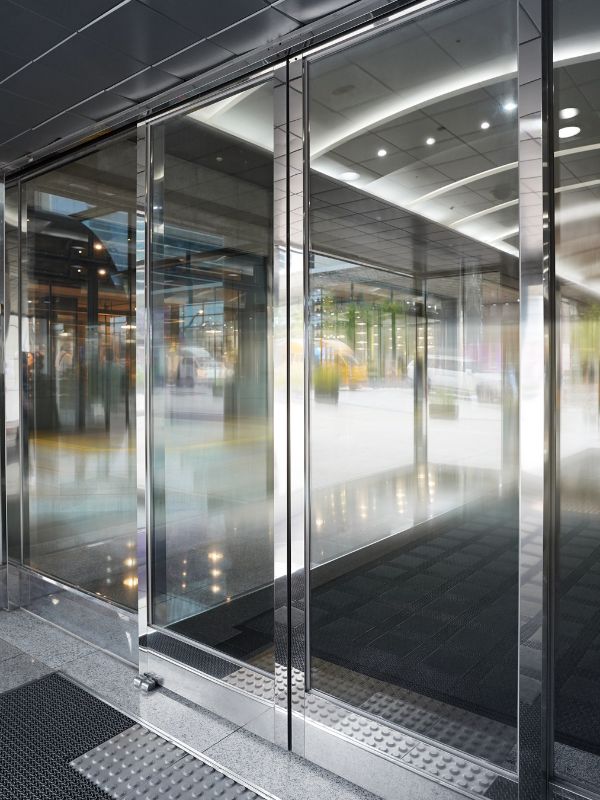
Aug 14: Need new doors for your business and considering automatic ones as an option? To help you decide if this upgrade is right for your space, here are some of the top benefits automatic doors have over traditional ones, and why so many businesses have made the switch.
They Keep Foot Traffic Moving
When customers walk up to your entrance with their hands full, a door that opens on its own removes a bottleneck.
In high-traffic environments like grocery stores, hospitals, or busy retail shops, every second of delay at the entrance adds up. Automatic doors let people walk in and out without breaking stride. That keeps the flow of customers moving and reduces crowding near the entrance, especially during peak hours.
They Cut Down on Energy Loss
A door that swings open and stays open longer than it needs to wastes conditioned air. Automatic doors open only when someone’s there and close quickly once they pass through.
That tighter cycle means your heating and cooling system isn’t compensating for long stretches of open airflow. Over time, the energy savings from that consistency can offset a portion of the installation cost, especially in climates where temperature control is a year-round expense.
They Make Your Business More Accessible
While automatic doors aren’t required by the ADA, they can help businesses better accommodate customers with mobility challenges, whether that’s someone using a wheelchair, a walker, or pushing a stroller.
A customer who can enter your building without needing to pull or push a heavy door is a customer who has a smoother experience from the start. That ease of access can influence whether someone returns, and whether they recommend your business to others who share similar needs.
They Lower the Risk of Contact-Based Illness Spread
Door handles are among the most frequently touched surfaces in any public building. Every person who grabs that handle leaves something behind and picks something up.
Automatic doors remove that touchpoint entirely. Customers walk in without touching anything. During cold and flu season, or in settings like healthcare facilities or food service, that reduction in surface contact is a direct benefit to the health of your staff and the people walking through your door.
They Reduce Wear on the Door Itself
A door that gets yanked open dozens of times a day takes a beating. Hinges loosen, frames shift, and closers wear out faster than they should.
Automatic doors use controlled, consistent movement every time they operate. The mechanism opens and closes at the same speed and with the same force regardless of who’s using it. That consistency reduces the stress on the door components, which extends the lifespan of the door and brings down long-term maintenance costs.
They Give Your Entrance a More Professional Look
First impressions happen before a customer says a word or picks up a single product. The entrance sets the tone.
An automatic door signals that the business behind it is established and detail-oriented. It’s not a dramatic change, but it’s a noticeable one. Customers walking into a space with a smooth, modern entrance tend to have higher expectations of the experience inside, and businesses that invest in that perception often see it reflected in how customers engage once they’re in.
They Work Better in Hands-Free Environments
Some businesses require employees to carry items through the entrance regularly. Think about a warehouse, a catering operation, or a medical supply facility where staff move between spaces with equipment or product in their hands.
In those environments, a manual door creates a daily frustration. Someone has to stop, set things down, open the door, and pick everything back up. Automatic doors eliminate that interruption. Staff move through without stopping, which adds up to time saved across a full workday.
They Support a Quieter, Calmer Entrance
Doors that slam, squeak, or bang shut are an easy thing to overlook until you’re on the customer side of the noise. In settings like medical offices, spas, or upscale retail, that kind of noise disrupts the environment you’ve worked to create.
Automatic doors open and close with a controlled, quieter motion. The entrance stops being a source of sound and becomes a neutral part of the space. For businesses where atmosphere is part of the product, that matters more than it might seem.
They Can Lower the Demand on Your Staff
In some setups, an employee near the entrance ends up functioning as a de facto door attendant, holding the door for customers or stepping in when someone is struggling with it. That’s time spent on a task that doesn’t need a person.
Automatic doors handle that function on their own. Staff can stay focused on actual customer service rather than managing the entrance. In a smaller business, that means an employee can stay with the customer they’re assisting instead of repeatedly leaving the counter to open the door.
They Perform Reliably in High-Volume Settings
A manual door in a high-traffic location wears out faster than the same door in a low-traffic one. The hardware simply isn’t built to withstand the volume. Automatic doors are specifically engineered for consistent, repeated use, and quality commercial models are rated for hundreds of thousands of cycles.
For a business that sees hundreds of customers a day, that engineering specification is the difference between a door that works and one that’s constantly in need of service.
They Can Be Integrated With Your Security Setup
Modern automatic door systems don’t operate in isolation. Many models connect with access control systems, intercoms, or security cameras, allowing you to manage who enters and when.
For businesses that need controlled access during certain hours or in specific areas of the building, that integration gives you a layer of security that a manual door simply can’t offer without additional hardware bolted onto it separately. You get the function of the automatic door and the security layer built into the same system.
The Bottom Line on Automatic Doors
Automatic doors aren’t a luxury add-on reserved for large commercial buildings. For businesses of almost any size, they bring consistent, measurable benefits that touch everything from energy use to customer experience.
If you’re already in the market for new commercial doors, the case for going automatic is worth taking seriously. The upfront investment tends to pay off through reduced maintenance, improved accessibility, and the kind of entrance that tells customers your business has its act together before they’ve even walked in.