
The Viksit Bharat–Guarantee for Rozgar and Ajeevika Mission (Gramin), or VB-G RAM G Act 2025, marks a significant evolution in India’s rural development policy, replacing the decades-old MGNREGA program. While MGNREGA provided a safety net by guaranteeing 100 days of wage employment for rural households, VB-G RAM G shifts the focus from mere wage support to productive development, asset creation, and long-term rural resilience.
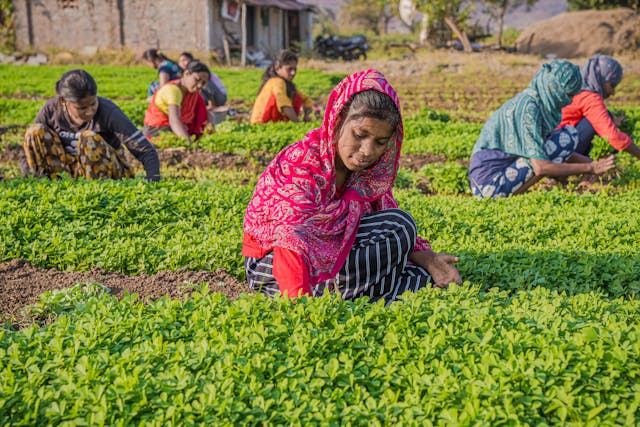
Union Minister Shivraj Singh Chouhan described the new initiative as “a far better scheme that will completely transform villages.” The law aims to integrate income support, infrastructure development, agricultural stability, and rural productivity into a single, cohesive framework. Why VB-G RAM G Matters
MGNREGA was historically a safety valve, designed to prevent rural starvation and provide bargaining power to labourers when private work was scarce. Over the past two decades, however, India’s rural economy has evolved dramatically:
- Over 80 crore people receive free food grains under PMGKAY.
- Direct benefit transfers (DBTs) now deliver regular cash to 45 crore beneficiaries.
- States spend Rs 2.46 lakh crore annually on unconditional cash transfers to women.
In this context, the traditional MGNREGA model—focused on wage distribution—no longer fully addresses the current needs of rural India. VB-G RAM G adapts to this changing environment by emphasizing productivity, asset creation, and sustainable village development. Key Features of VB-G RAM G
- From Safety Net to Development Floor With food security and cash transfers largely addressed, employment schemes can now focus on building durable rural assets—roads, drains, water tanks, and community infrastructure—enhancing long-term productivity rather than only providing temporary relief.
- Alignment with Agricultural Cycles A key innovation is allowing states to pause public works for up to 60 days during peak sowing and harvesting seasons, preventing labour shortages in agriculture. This ensures that rural employment schemes complement, rather than compete with, private farming needs.
- Focus on Income Generation and Village Capability The new scheme increases guaranteed work to 125 days, shifting emphasis from mere consumption smoothing to productive engagement. Villages will not only receive labour but tangible assets that improve infrastructure, climate resilience, and agricultural efficiency.
- Digitally Enabled and Performance-Driven VB-G RAM G leverages biometric tracking, grievance redressal, and digital monitoring to ensure accountability and inclusion. Panchayats play a larger role in planning, while the Centre and states share costs and responsibilities, promoting co-ownership of development outcomes.
Potential Benefits for Society and Economy
- Rural Society: By building roads, schools, and irrigation facilities, villages will see a tangible improvement in living standards, education, and healthcare access. Labourers benefit from predictable wages combined with skill development.
- Rural Economy: Infrastructure improvements and enhanced farm productivity can boost agricultural yields, reduce post-harvest losses, and improve market access, increasing rural income and economic resilience.
- Employment Sector: By focusing on productive work rather than just wage distribution, the scheme encourages sustainable employment. Labourers gain marketable skills, communities gain assets, and small farmers have reliable access to workforce during critical periods.
Challenges and Considerations
The success of VB-G RAM G depends on effective execution and monitoring:
- Ensuring that the 60-day pause aligns with local agriculture without reducing employment opportunities.
- Avoiding budget caps that limit the guaranteed work days.
- Maintaining inclusive biometric and offline options to ensure no rural worker is excluded.
- Measuring impact in terms of outcomes (infrastructure built, productivity gains) rather than just labour participation.
Conclusion
The VB-G RAM G Act is more than a renaming of MGNREGA; it is a paradigm shift in rural policy. In a digitally connected, welfare-rich India, safety nets are evolving into springboards for development. By integrating income support with asset creation, agricultural stability, and village productivity, VB-G RAM G has the potential to transform rural livelihoods, strengthen the economy, and modernize the employment landscape
As India continues its journey toward a Viksit Bharat (Developed India), VB-G RAM G represents a bold experiment in ensuring that welfare, work, and development are not trade-offs but complementary forces shaping the future of rural India.