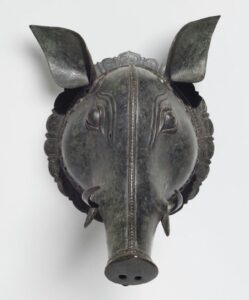
Pic credit:philamuseum.org
Introduction: A Boar-Headed Guardian Across Continents
The Panjurli mask, a boar-headed Bhuta, is a striking example of Tulu Nadu’s rich ritual artistry, now preserved at the Philadelphia Museum of Art. Crafted between the 18th and 19th centuries by an unknown Indian artisan, this metal mask embodies the sacred power of Panjurli—a guardian spirit revered in Bhuta Kola, a centuries-old ritual tradition from Karnataka’s coastal region.
Far beyond its role as a museum artifact, the Panjurli mask represents the living intersection of spirituality, folklore, and cultural identity. Its story resonates in modern media as well, notably in the 2022 Kannada film Kantara, where Panjurli becomes the spiritual heartbeat of the narrative, protecting forests, communities, and moral balance.
The Significance of the Panjurli Mask
The Panjurli mask is far more than a sculptural object—it is a vessel of divine presence. In Tulu Nadu, metal masks like this one are central to Bhuta Kola ceremonies, where performers, or mediums, become possessed by the deity. The mask transforms the human body into a sacred conduit, allowing Panjurli to sing, dance, and offer guidance or judgment to villagers.
The Philadelphia Museum of Art preserves this mask as a testament to:
Artistic mastery: The craftsmanship, metalwork, and attention to symbolic detail reflect centuries of ritual artistry.
Spiritual significance: Panjurli embodies protection, justice, and ancestral authority, reminding viewers of the deep spiritual roots of Tulu Nadu communities.
Cultural preservation: By housing the mask, the museum safeguards a tangible piece of intangible heritage, connecting global audiences with India’s ritual traditions.
From Ritual to Screen: Panjurli in Kantara (2022)
The 2022 film Kantara, directed by Rishab Shetty, brought Panjurli’s mythic presence to mainstream audiences. Drawing inspiration from Bhuta worship, the movie depicts Panjurli as a forest guardian, intervening whenever humans threaten ecological balance or violate ancestral promises.
Although the physical metal mask is not always shown, the film channels its symbolism through performance, costume, and ritualized possession. The cinematic Panjurli mirrors the mask’s purpose in real-life Bhuta Kola: a medium through which divine power communicates with humans, offering protection, justice, and spiritual guidance.
Kantara and the Panjurli mask together demonstrate how ancient traditions continue to shape modern cultural narratives, making folklore relevant to contemporary audiences.
Symbolism and Cultural Importance
The Panjurli mask represents several layers of meaning:
Guardian of Nature: The boar-headed deity safeguards forests, crops, and the environment, reminding humanity to honor the land.
Moral Authority: Panjurli serves as a divine judge, correcting wrongdoing and upholding social and ethical codes.
Ancestral Connection: The mask links present communities with their forebears, embodying respect for history, heritage, and spiritual lineage.
Artistic Expression: The intricate metalwork highlights the aesthetic sensibilities of Tulu Nadu artisans, blending utility with sacred symbolism.
The Mask’s Role in Ritual Performance
During Bhuta Kola ceremonies, the Panjurli mask is central to the performance. The medium dons the mask to invite the spirit into their body, turning the ritual into a living theatre of devotion. These nocturnal rituals combine:
Dance and music
Trance-induced possession
Oral storytelling and ancestral wisdom
Resolution of social disputes and blessings for communities
The mask transforms from an object of art into a spiritual instrument, bridging the material and divine worlds.
Global Recognition: From Tulu Nadu to Philadelphia
By preserving the Panjurli mask, the Philadelphia Museum of Art has ensured that this regional ritual object gains international recognition. Museum-goers can witness a centuries-old spiritual tradition, understand the connection between ritual and craftsmanship, and appreciate the cultural heritage of Karnataka.
At the same time, films like Kantara complement this preservation by keeping the spirit and stories of Panjurli alive in contemporary imagination, making the mask not just a relic but a symbol of living culture.
Conclusion: Panjurli’s Enduring Legacy
The Panjurli mask at the Philadelphia Museum of Art is more than metal and ornament—it is a conduit of spiritual power, a symbol of moral authority, and a celebration of Karnataka’s ritual artistry. Through its historical preservation and cinematic reinterpretation in Kantara, Panjurli continues to inspire awe, educate audiences, and remind humanity of the sacred ties between nature, ancestry, and culture.
Whether encountered in a museum hall or on the silver screen, the boar-headed Bhuta remains a timeless guardian, bridging centuries and continents with its enduring power.
