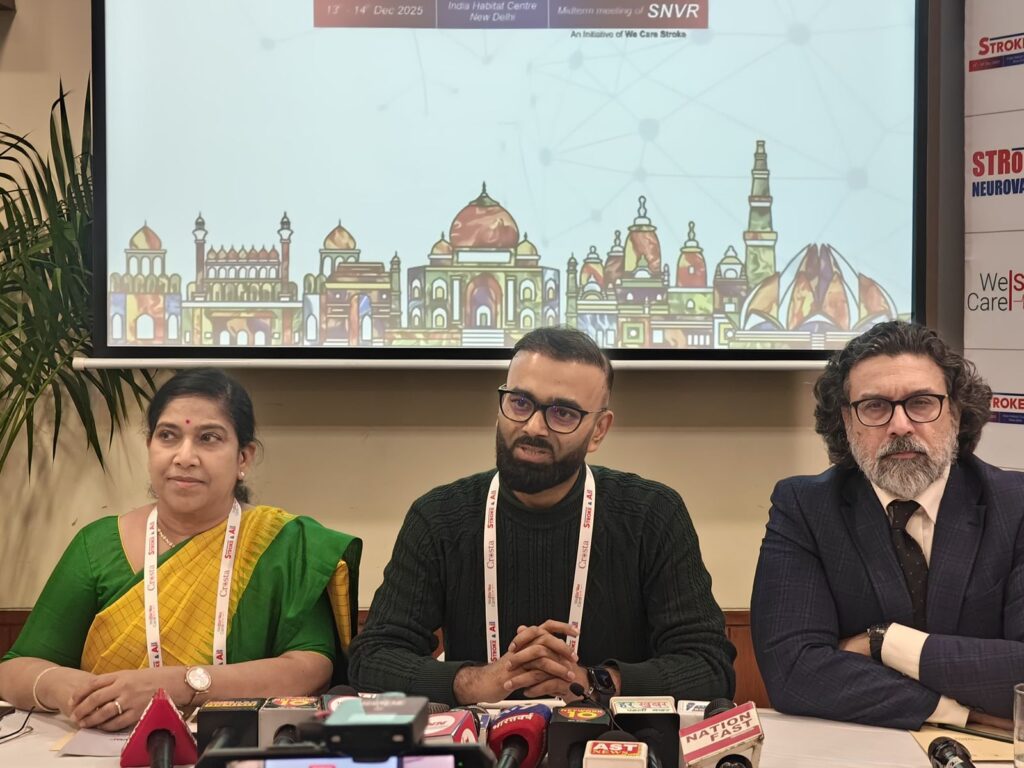
 New Delhi, Dec 15: The much-anticipated Stroke & AI 2025 conference commenced today at the India Habitat Centre, marking a significant milestone in the global conversation on the integration of artificial intelligence in modern stroke care. The two-day international gathering witnessed participation from leading neurologists, neurosurgeons, neurointervention specialists, physicians, data scientists, and healthcare innovators from India and across the world, all committed to reshaping the future of stroke diagnosis, treatment, and rehabilitation.
The inaugural session was graced by distinguished experts including Dr. Kameshwar Prasad, Chairperson – Stroke & AI 2025, Dr. Biplab Das- Organising Secretary– Stroke & AI 2025, Dr. P. Vijaya, President, ISA, and Dr. Dheeraj Khurana, PGI Chandigarh, along with many eminent personalities from the fields of neurosciences and digital health. Their presence highlighted the growing momentum around AI-driven innovation in acute neurological care and the need for multidisciplinary collaboration.
The conference aims to advance discussions on how AI-powered tools—ranging from predictive algorithms and automated imaging interpretation to workflow optimisation and personalised rehabilitation—can accelerate treatment timelines, improve diagnostic accuracy, and significantly reduce stroke-related mortality and long-term disability. Sessions on mechanical thrombectomy, advanced neurointervention, perfusion imaging, emergency workflow triage, robotic support, and AI-based predictive modelling captured strong interest among attendees.
Addressing the gathering, Dr. Kameshwar Prasad, Chairperson of Stroke & AI 2025, emphasised how AI is redefining the landscape of neurological emergencies. He said “Stroke care is at the threshold of a major transformation, and artificial intelligence is at the heart of this change. Today’s discussions clearly show that AI is no longer a future possibility but a present-day tool that can reduce treatment delays, sharpen clinical decisions, and support precision-driven procedures like thrombectomy and advanced imaging. The collective expertise gathered here reflects our shared vision to lower mortality and disability through technology-enabled stroke care that is faster, smarter, and far more accessible.”
Dr. Biplab Das, Organising Secretary of Stroke & AI 2025 said “What we witnessed today is a powerful synergy between clinical wisdom and technological ingenuity. AI has the ability to transform how we detect, classify, and treat stroke, especially when integrated with modern treatment modalities. Our goal through this conference is to cultivate collaborations that turn these innovations into everyday clinical solutions. With experts from across the globe exchanging ideas, Stroke & AI 2025 stands as a catalyst for a new era of stroke care built on speed, precision, and equity.”
Expressing her appreciation for the initiative, Dr. P. Vijaya, President of ISA, stressed the importance of national-level adoption and training. She said “India has the potential to be a global leader in AI-supported stroke management, provided we invest in structured training, digital infrastructure, and rapid-response systems. The insights shared today reinforce that AI can bridge critical gaps in imaging interpretation, emergency triage, and treatment planning, particularly in resource-limited settings. By empowering clinicians with faster and more accurate tools, AI can help save countless lives and significantly reduce the long-term burden of stroke on families and communities.”
Throughout the day, expert sessions examined real-world case studies demonstrating how AI-supported detection and triage can cut down door-to-needle and door-to-groin times, enabling earlier intervention—an essential factor in preventing irreversible brain damage. Discussions also highlighted the increasing relevance of tele-stroke models and cloud-based AI platforms that make specialist guidance accessible even in remote locations.
With a robust scientific program and enthusiastic participation from international and national experts, Stroke & AI 2025 has set the stage for redefining stroke management protocols in India and beyond. The conference continues tomorrow with advanced workshops, expert panels, and collaborative strategy discussions aimed at building future-ready systems for comprehensive stroke care.