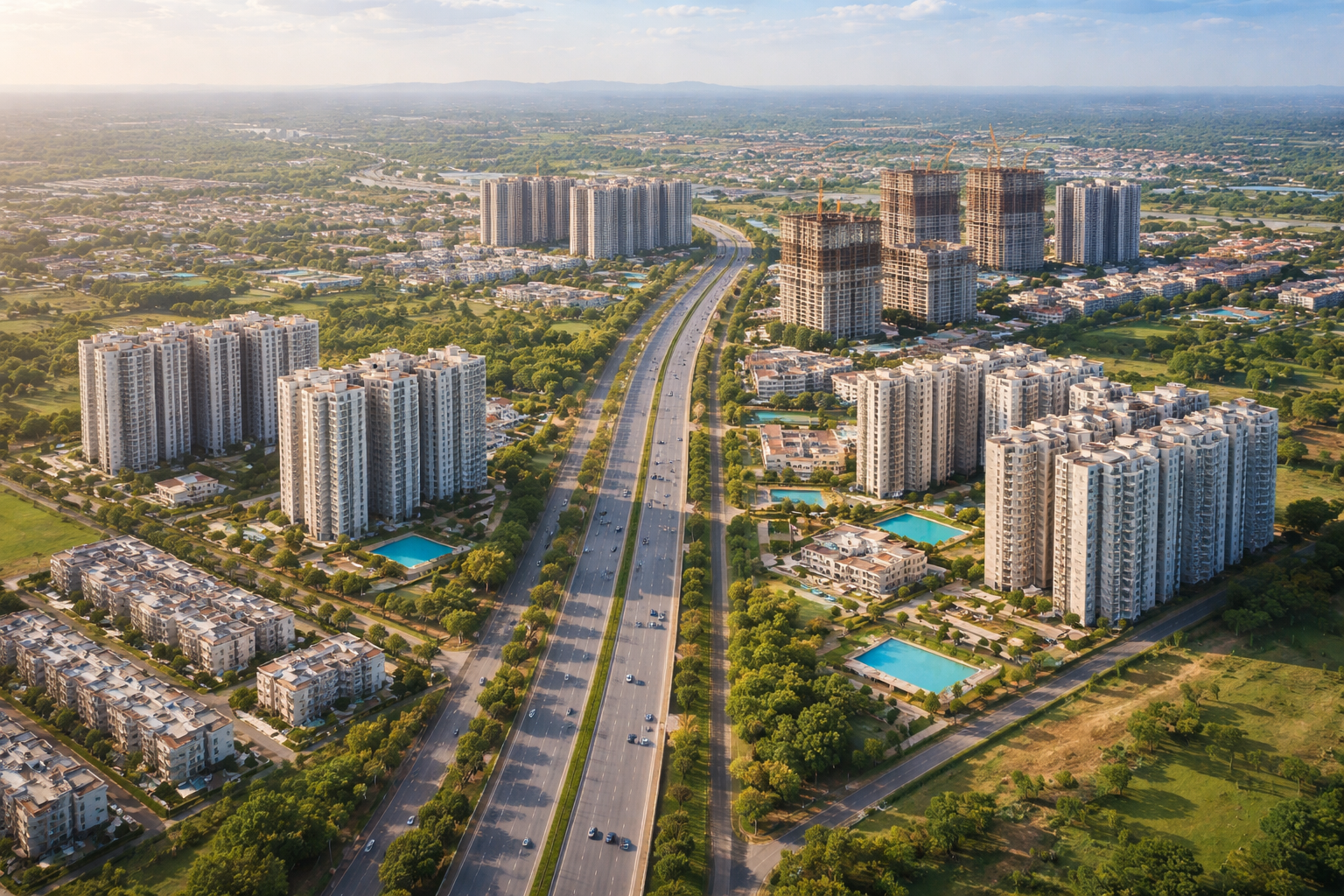
India’s real estate growth is gradually expanding beyond the country’s major metropolitan centres, with Tier-2 and Tier-3 cities emerging as key demand hubs amid improving infrastructure, rising urbanisation and expanding connectivity.
As economic activity spreads across regions and infrastructure networks strengthen, smaller cities are witnessing growing interest from both homebuyers and developers. Relatively affordable property prices, improving urban planning and expanding employment opportunities are encouraging buyers to explore residential options beyond traditional metro markets.
Several cities including Indore, Jaipur, Lucknow, Surat and Coimbatore have seen steady traction in residential and commercial real estate in recent years. Developers are increasingly launching integrated townships, plotted developments and mixed-use projects to cater to evolving consumer expectations in these markets.
A similar trend is visible in the Chandigarh Tricity region comprising Chandigarh, Mohali and Panchkula which is increasingly emerging as a key real estate hub in North India. Infrastructure upgrades, expanding road networks and planned urban development are strengthening the region’s position as a preferred residential destination.
Growth corridors such as New Chandigarh, Mullanpur, Aerocity and sectors along the PR-7 Airport Road have witnessed rising investor and end-user interest. Improved connectivity to Chandigarh International Airport, expanding commercial activity and the development of new residential sectors are contributing to the region’s growing real estate momentum.
Abhay Jindal, Managing Director, Homeland Group, said emerging cities are playing an increasingly important role in shaping the next phase of India’s real estate growth.
“Tier-2 and Tier-3 cities are witnessing strong momentum as infrastructure development and improved connectivity continue to enhance their growth prospects. In regions such as the Chandigarh Tricity as well, planned urban expansion and better connectivity are encouraging both investors and end-users to explore new residential opportunities,” he said.
Industry experts note that buyer preferences in smaller cities have also evolved significantly in recent years. Exposure to organised housing formats and rising disposable incomes are encouraging homebuyers to look for projects that offer better planning, modern amenities and integrated community living.
Udit Jain, Director, ONE Group , said the evolution of buyer aspirations is decisively reshaping the development landscape in emerging cities.
“Homebuyers in Tier-2 and Tier-3 markets today are markedly more sophisticated, informed and globally aware. Their expectations extend far beyond conventional housing they are seeking meticulously planned developments that integrate robust infrastructure, contemporary design sensibilities and a holistic lifestyle experience on par with leading metropolitan centres” he said.
The market is entering a maturity phase, driven by informed buyers, infrastructure-led micro-markets, and stable, long-term end-user demand over affordability.
Preksha Singh, CEO Agrasheel Infra, says, “What’s happening in Lucknow is a maturity cycle unfolding in real time. The buyer today is informed, financially disciplined and thinking long term. Five years ago, affordability was the headline. Today, it’s about community design, access to infrastructure corridors and developer credibility. The city’s expanding expressway network and commercial nodes are creating micro-markets with a clear identity. Importantly, we are seeing stable absorption rather than speculative spikes. That stability is what makes Tier-2 growth durable. Lucknow is not chasing metro benchmarks anymore; it is defining its own housing narrative.”
Connectivity-led growth is driving a real estate upswing in emerging cities, drawing developers to build integrated, future-ready communities
“Improving infrastructure and regional connectivity are increasingly driving real estate momentum in emerging urban centres,” said Mr. Shamsheer Singh, Director, AIPL. “As highway networks expand, air connectivity improves and economic activity gradually decentralises from major metros, Tier-2 and Tier-3 cities are witnessing stronger housing demand. These markets are becoming more attractive due to relatively lower land costs and improving urban infrastructure, encouraging organised developers to introduce well-planned residential and mixed-use developments that cater to evolving homebuyer expectations for quality construction, integrated communities and modern lifestyle amenities.”
With infrastructure development gathering pace and urban expansion extending across regions, Tier-2 and Tier-3 cities along with growing urban clusters such as the Chandigarh Tricity are steadily positioning themselves as important contributors to India’s evolving real estate landscape.


