
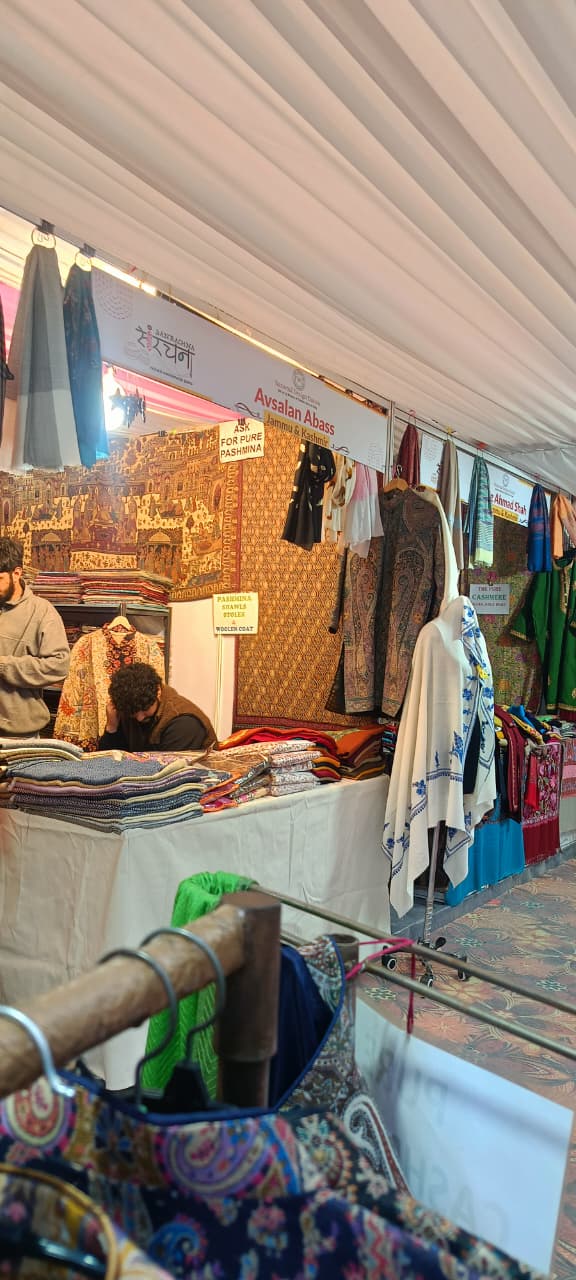
New Delhi, Jan 19: The National Design Center successfully concluded its Handloom and Handicraft Exhibition, Sanchrana, at Handloom Haat, Janpath, marking a strong showcase of India’s rich textile and craft heritage. Held from January 10 to January 18, 2026, the exhibition attracted a large number of urban consumers, industry professionals, and trade buyers, reflecting growing interest in traditional Indian craftsmanship.
According to the organizers, the expo recorded an impressive business turnover of over ₹3 crore during its nine-day run. The strong sales performance translated into direct economic benefits for artisans and weavers, while also opening new market linkages and commercial opportunities for participants from across the country.
A major highlight of the exhibition was the continuous fashion showcases held throughout the event, which presented traditional textiles through a contemporary design lens. Curated collections included wedding wear, Phulkari, sarees, khadi, and modern handloom-based corporate attire. Alongside fashion presentations, visitors explored a wide range of handcrafted products such as textiles, jute goods, home décor, gift items, and lifestyle accessories.
More than 100 participants, including weavers, artisans, self-help groups, cooperatives, and production units from different states—took part in the expo, using the platform to directly connect with consumers, wholesalers, exporters, and designers.
The exhibition was organized in collaboration with the Development Commissioner (Handlooms), National Institute of Fashion Technology (NIFT), National Jute Board, NABARD, and Satyam Fashion Institute. This multi-institutional partnership strengthened the platform and ensured wider outreach and professional engagement.
The primary objective of Sanchrana was to promote India’s handloom and handicraft traditions at a national level, empower artisans through sustainable market access, and bridge the gap between traditional craftsmanship and modern consumer preferences. The successful conclusion of the expo reaffirmed the growing relevance of indigenous crafts in contemporary markets and highlighted the role of such initiatives in preserving India’s cultural and creative legacy.