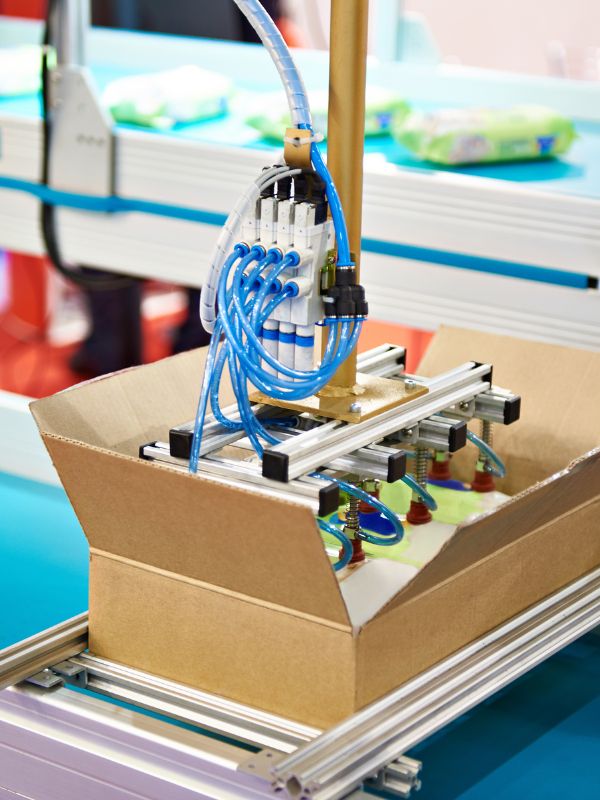
For more reliable machinery and streamlined production, learn why the packaging industry benefits from implementing technology like DC-DC converters.
Packaging facilities run on automated technology. As machinery becomes more sophisticated, the need for stable and reliable power delivery increases proportionally.
DC-DC converters are electronic devices that convert direct current (DC) from one voltage level to another. They deliver stable power for a wide range of industrial applications.
Business owners in the packaging industry might examine their infrastructure and wonder if their operations can benefit from DC-DC converters. Find out why these electronic components provide tangible improvements in equipment longevity, energy efficiency, and operational consistency.
Enhancing Equipment Reliability
Packaging machines contain sensitive microprocessors and sensors that require precise voltage levels to function correctly. Fluctuations in the main power supply cause errors or system resets, which halt production lines unexpectedly.
Consistent power delivery keeps automated arms, conveyor belts, and labeling systems running without interruption. DC-DC converters stabilize this voltage, delivering a constant output regardless of input variations. They prevent damage to expensive control units and reduce maintenance costs over time.
Improving Energy Efficiency
Operational costs in manufacturing plants depend heavily on energy consumption. Linear regulators waste significant energy as heat when stepping down voltage levels. Switching DC-DC converters operate with much higher efficiency, minimizing energy loss during the conversion process. The result is reduced thermal load within electrical cabinets and cooling systems that don’t have to work as hard.
Space Optimization in Control Panels
Factory floor space is a premium asset in any production environment. Engineers constantly look for ways to reduce the footprint of electrical cabinets to make room for more machinery. The size of power conversion components matters greatly in this equation.
Understanding the differences between standard and miniature DC-DC converters allows system designers to select the appropriate module for tight spaces. Miniature converters offer high power density, enabling engineers to pack more functionality into smaller control panels without sacrificing performance.
Facilitating Battery-Operated Mobile Units
Automated guided vehicles (AGVs) and mobile robots are becoming common in packaging warehouses for material handling. These battery-operated units require efficient power management to maximize uptime between charges.
DC-DC converters efficiently step up or step down battery voltage to power the motors, sensors, and communication modules on board. High-efficiency conversion ensures that the battery energy goes toward movement and operation rather than heat waste. This technology keeps mobile fleets active longer, boosting overall warehouse productivity.
Noise Reduction and Signal Integrity
Electronic noise interferes with the accurate reading of sensors and the transmission of data. High-speed packaging lines generate substantial electromagnetic interference (EMI) from motors and drives.
Isolated DC-DC converters create a barrier that prevents this noise from affecting sensitive control circuits. This isolation preserves signal integrity, ensuring that scanners read barcodes correctly and weigh stations report accurate measurements. Reliable data transmission prevents costly packaging errors and quality control issues.
Conclusion
For business owners prioritizing efficiency, investing in quality power management solutions is a strategic move for long-term success. From stabilizing voltage for sensitive electronics to enabling compact machine designs, the packaging industry benefits from DC-DC converters. Integrating these components leads to more reliable machinery, lower energy bills, and smoother production flows.